T-money Card in Korea 2026: How to Buy, Top Up, and Use It From Incheon Airport

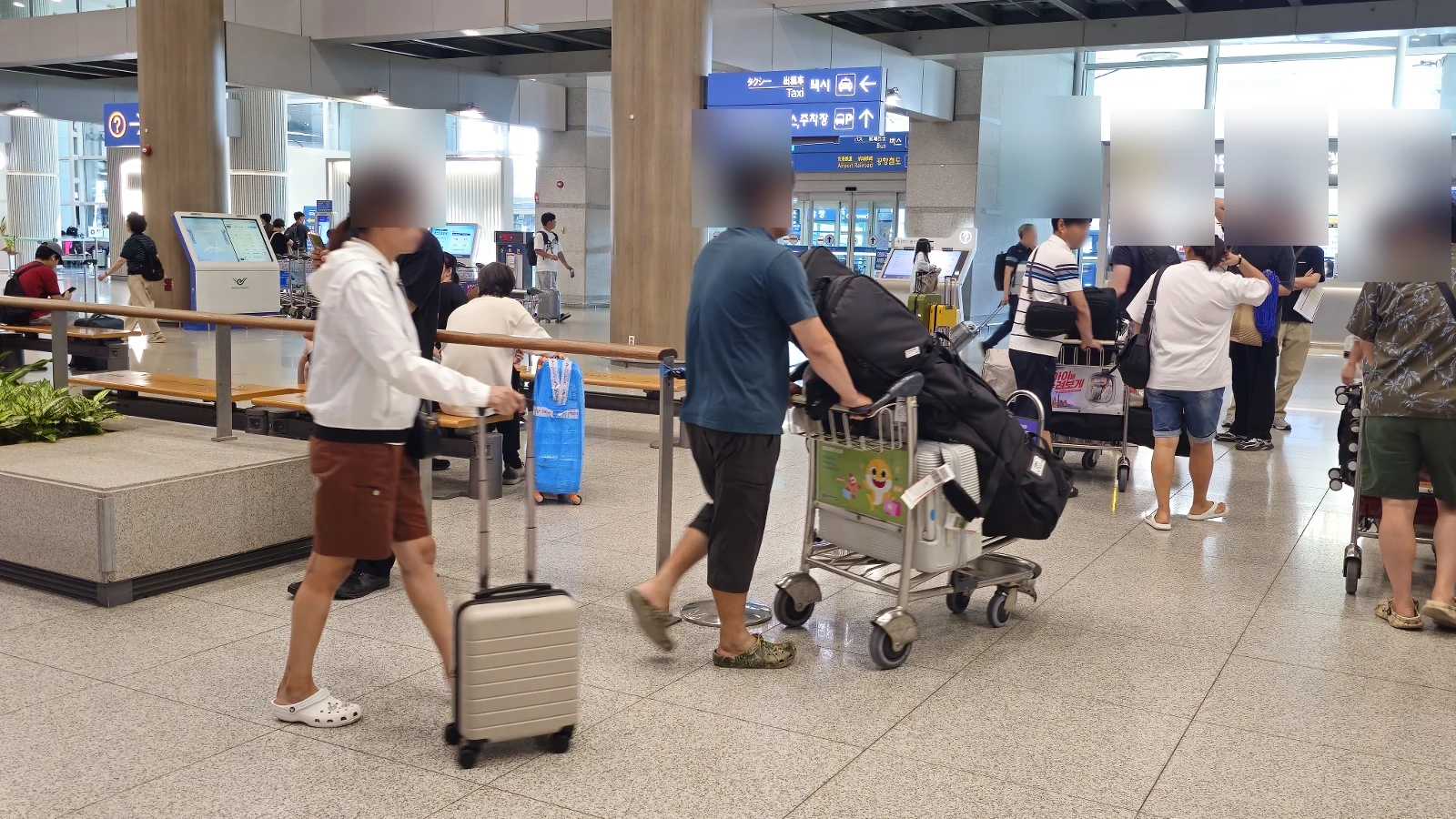
Walk out of arrivals at Incheon and you’ve got three decisions waiting at once. How you’re getting into Seoul. Whether you’re buying a SIM or an eSIM. And where you’re getting a transit card.
I’d always assumed the last one was the easy part — buy T-money at an airport convenience store, done.
Then I went and checked Terminal 1 properly for this guide, and it turned out not to be a single-sentence answer. Four CU stores, four different situations. One didn’t stock the card at all. Two had it. One normally carries it but was sold out that morning.
At the telecom counters I found promotions handing out a free T-money card if you met certain conditions. And because the published information on mobile T-money didn’t quite line up across sources, I wrote to Tmoney’s customer center and got an answer back in writing.
So this guide doesn’t stop at “you can buy T-money at a convenience store.”
Which card to get, where to find one, how much to load, and how to actually use it from the airport into Seoul — plus what to do when the store you walk into is out of stock, or when you forget to tap off on a bus.
If you read one thing before you land, this should be enough to tell you what to do first.
If You’re in a Hurry
The airport details below come from my own check of Incheon Terminal 1 on August 24, 2026. Stock and promotions change.
- For most first-time visitors, a single physical T-money card is the simplest way to go.
- Getting a SIM or eSIM as well? Stop at the telecom counter first — some plans throw in a free T-money card.
- The card and the money on the card are two different purchases.
- Convenience stores will let you pay for the card itself by credit card. Loading the transit balance is a cash job. Some sellers take cash only.
- Load about ₩20,000 to start. Top up later if you need more.
- Ask an airport CU for “a T-money card” and you’ll likely be handed the TMONEY TRAVEL CARD, which runs about ₩1,000 more than the basic one.
- If you specifically want the plain basic card, the airport may not be where you find it.
- Airport buses aren’t a yes-or-no on T-money. Check the operator and the route.
- On Seoul buses, tap on and tap off. If you forget, don’t run after a bus that’s already moving.
What’s Inside
1. Which T-money Card Should You Buy
Which card is this?
The cards look similar in a quick airport encounter, but the product, price, and balances are not the same.
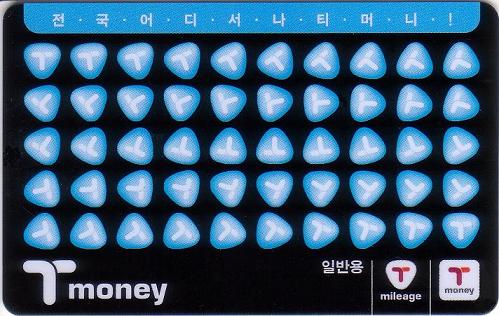
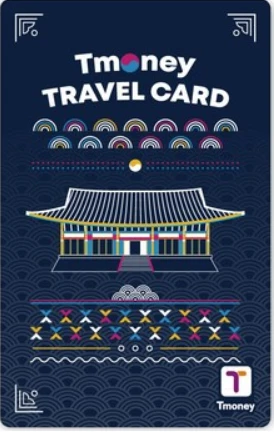
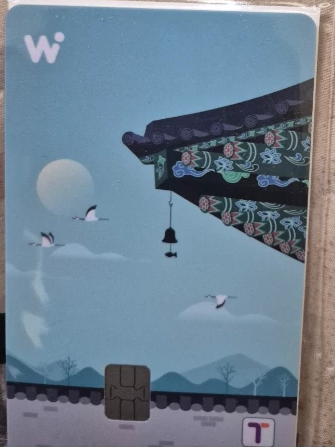
For a first trip, T-money is still the straightforward answer. It covers the subway and buses, and plenty of taxis and convenience stores take it too.
What throws people is that T-money isn’t one card. You’ll see several similar names at the airport, and the differences aren’t obvious from the packaging.
The basic T-money card
The plain prepaid transit card. If you don’t need tourist perks, this alone does the job.
Tmoney’s traveler guide puts it at around ₩3,000 to start, with character and special-edition designs costing more.
At Incheon, though, there’s a practical catch. Walking the airport CU stores, I had trouble spotting the basic card on the shelves at all — ask staff for a T-money card and what often came back was the ₩4,000 TMONEY TRAVEL CARD.
Treat that as the likely outcome: at the airport CUs, the TRAVEL CARD is what you’ll meet first. If your heart is set on the plain basic card, you may not find one before you leave the terminal.
If you just want something that works on the subway, this isn’t worth chasing.
TMONEY TRAVEL CARD
For a first-time visitor, one of the more realistic picks. Official price as of September 2026: ₩4,000.
Same transit function as the basic card, with tourism, shopping, and culture partner benefits layered on top. Official sellers include convenience stores and the staffed bus ticket counters at Incheon Airport.
It’s roughly ₩1,000 more than the basic version. That’s a fine trade when it’s the card that’s actually in stock in front of you. Partner benefits do change, so buy it because it’s the easy card to get, not because of any specific discount.
TMONEY TRAVEL CARD+
₩6,000, combining T-money’s transit function with WOWPASS payments.
The part to hold onto: one card does not mean one balance. The T-money transit balance and the WOWPASS payment balance are kept separately. Putting money into WOWPASS does not top up your transit balance.
And the KOREA TOUR CARD?
Older travel articles bring up a physical KOREA TOUR CARD. That product has been discontinued, and it isn’t the same thing as today’s TMONEY TRAVEL CARD, so there’s no point hunting for the name.
One clarification, since it comes up later: what’s discontinued is the physical KOREA TOUR CARD. The Android app called “KOREA TOUR CARD Tmoney,” which I get to further down, is a separate mobile service that happens to share the name.
2. Buying a SIM Too? Change the Order
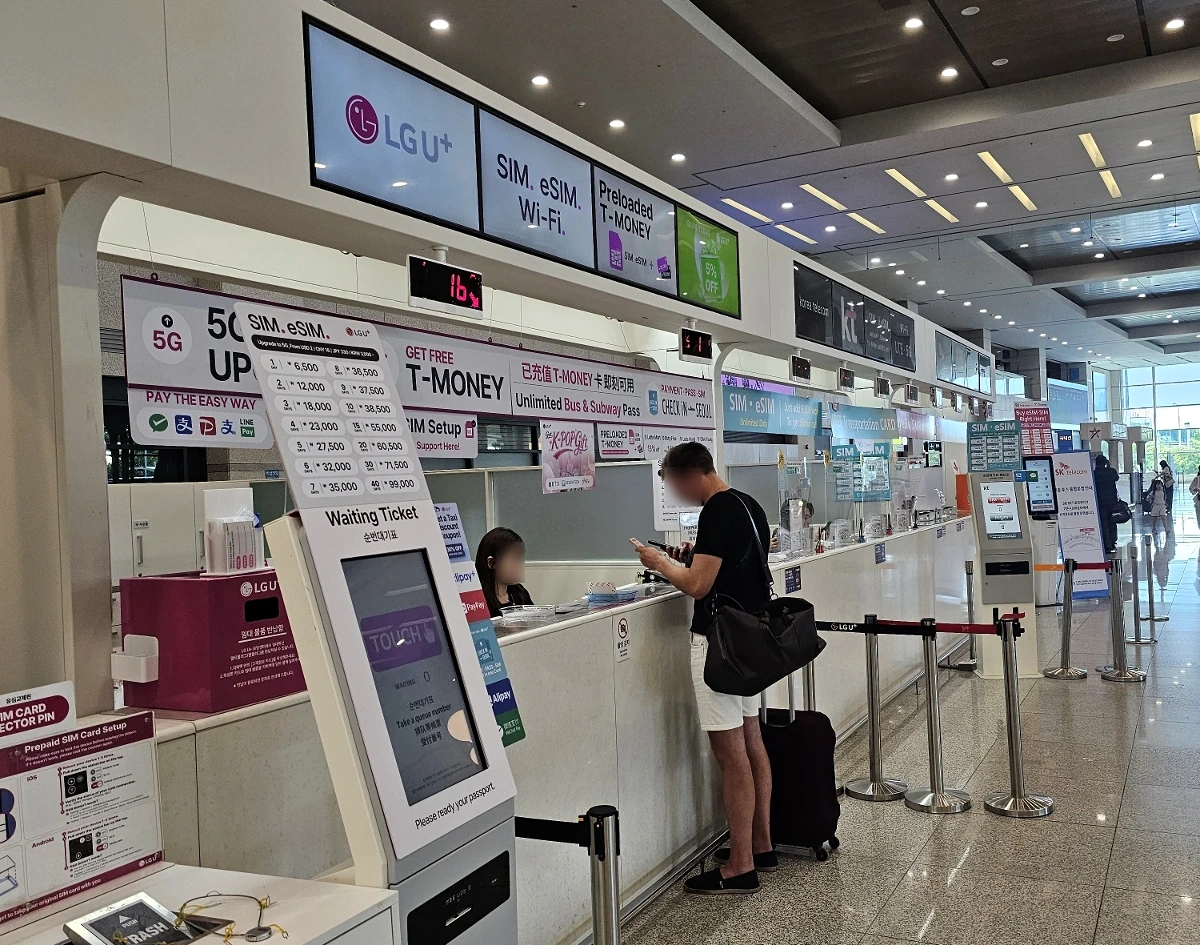
If a SIM or eSIM is already on your list, check the telecom counters before you buy a transit card.
When I looked in person at Incheon Terminal 1 on August 24, 2026, SKT, KT, and LG U+ all had T-money attached to some of their tourist plans.
What was on offer that day:
- SKT: some plans, 2 days or longer
- KT: some plans, 3 days or longer
- LG U+: some plans, 3 days or longer
The LG U+ counter had signage reading “GET FREE T-MONEY” and “Preloaded T-MONEY.”
That date matters, and I’d rather over-flag it than under-flag it. What I saw was the state of things on August 24, 2026 — specific plans, specific promotions. This is not a standing benefit. Plans, minimum plan durations, which card you get, and the promotion itself can all change.
So if you’re buying a SIM anyway, ask at the counter that day.
And ask one follow-up: does “free T-money” mean a free card, or a card with transit balance already loaded? Those are different things, and only one of them saves you a stop.
If nothing’s included, head to a convenience store or another seller then.
3. I Went Looking for T-money at Incheon’s CU Stores
Most guides online say you can pick up T-money at an Incheon Airport convenience store. True enough. It’s the next sentence that’s usually missing.
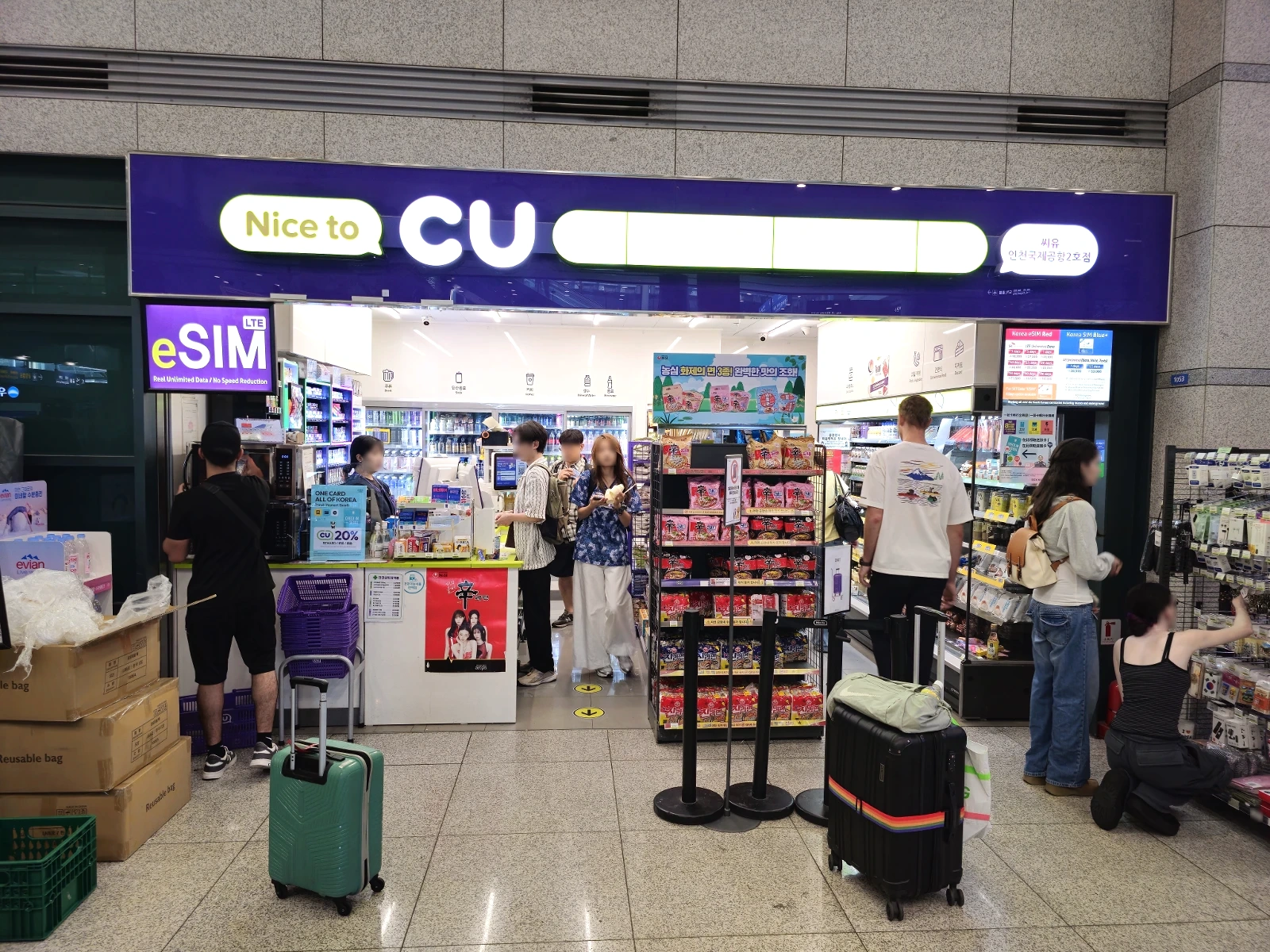
On August 24, 2026, I checked four CU stores at Terminal 1. They weren’t the same. One didn’t carry T-money. Two had it. One normally stocks it but was sold out when I got there.
“CU sells T-money” and “this CU has one right now” are separate claims.
So if the first store comes up empty, don’t write off the whole airport. Try another CU, or move on to the staffed bus ticket counters or the bookstore — both covered in the next section.
If I could pass along one thing from walking the terminal, it’s that knowing your second option matters more than memorizing one store’s location.
Can you pay for the card with a credit card?
Yes. At convenience stores, the purchase price of the physical card can go on a credit card.
Here’s where it gets confusing. Buying the card and loading the transit balance are separate transactions. Paying for an empty card with your credit card doesn’t mean that same card can load the balance.
Card purchase, credit card is fine. Transit balance, assume cash. That’s the version worth remembering.
Don’t stretch that into a rule for every seller, though. The T1 bookstore and the staffed bus ticket counters, both below, were Korean won cash when I checked.
One more from the same visit: asking a CU for “a T-money card” tended to get me the TRAVEL CARD rather than the basic one. Worth knowing if the basic card is what you came for.
4. If the CU Doesn’t Have One
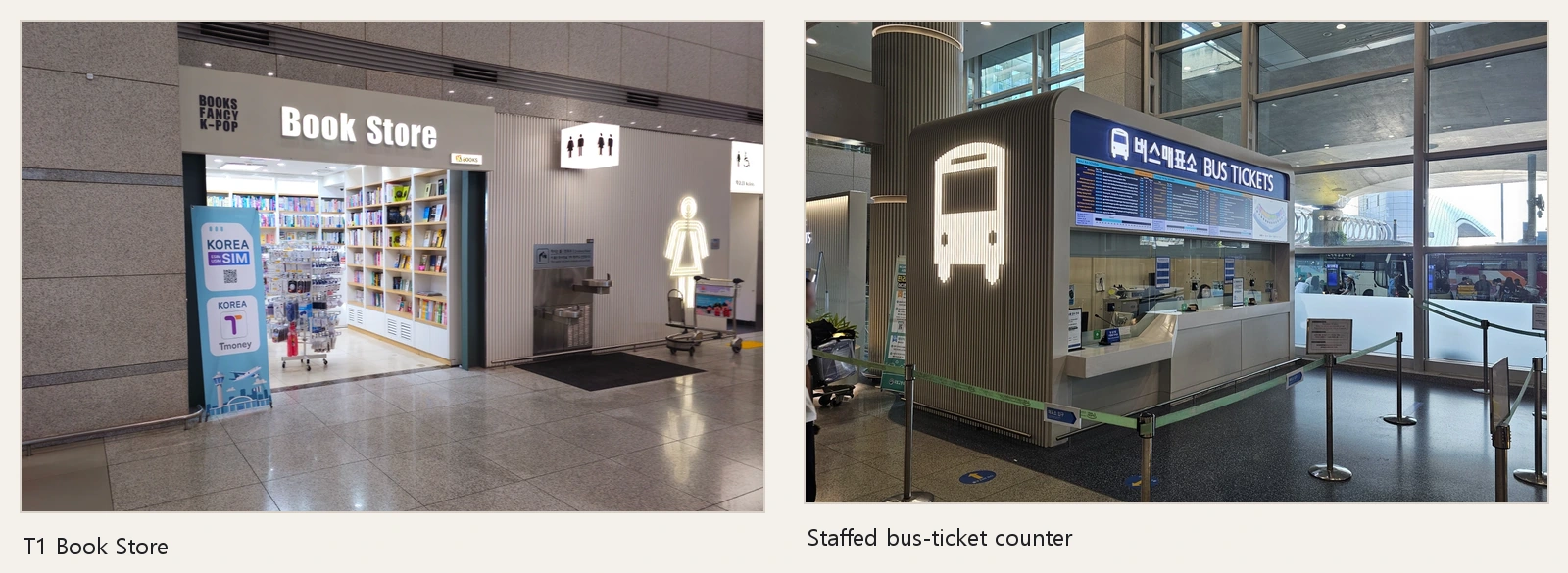
The staffed bus ticket counters
These counters at Incheon Airport are an official TMONEY TRAVEL CARD seller.
Every counter I checked at Terminal 1 on August 24, 2026 was selling the same bundle:
- TMONEY TRAVEL CARD: ₩4,000
- Transit balance preloaded: ₩20,000
- Total: ₩24,000
- Payment: Korean won cash only
If you’d rather not buy a card and then go find somewhere to load it, this is the shortcut. Just keep the two figures separate in your head — ₩4,000 is the card, ₩20,000 is your money on it.
Scope note: that’s Terminal 1. I wouldn’t assume Terminal 2 runs identically.
The T1 bookstore
Across from Exit 7 on the first floor of Terminal 1, there’s a bookstore that also sells physical T-money.
What I found: a ₩5,000 card, Korean won cash, in stock at the time of my visit.
Pricier than a CU, which is the obvious downside. The upside is situational — if you’ve tried several CUs and they’re all out, this is worth one more stop before you give up. No guarantee it’ll have stock either, but it’s a useful backup to have in mind.
5. How Much to Load at the Start
I’d start with about ₩20,000.
That’s my own recommendation, not an official Tmoney figure. The reasoning is simple: topping up is easy, and a fat leftover balance on your last day is a problem you have to go solve.
For comparison, Tmoney’s own traveler materials suggest something in the range of ₩30,000–40,000 for a three-night, four-day Seoul trip. Neither number is correct in the abstract. Riding a lot? Load more. Walking most of your itinerary? Start smaller.
You can always top up again, so there’s no reason to front-load a big balance.
One thing to factor in: if you’re planning to pay for an airport bus directly with T-money, a single fare will take a real bite out of a starting balance.
And where you can, one card per person.
6. Loading a Physical Card: Bring Cash
Show this screen to the cashier
티머니 카드에 2만원 충전해 주세요.
Please add ₩20,000 to this T-money card.
Worth drawing the line once more.
Buying the card — credit card works at convenience stores.
Loading the transit balance — plan on Korean won cash.
Your foreign credit card working fine for everyday purchases at a Korean convenience store tells you nothing about whether it’ll top up T-money.
If you’re going with a physical card, carrying enough Korean cash for that first load is the low-risk move. Hand the staff your card and the cash, tell them the amount, done.
And don’t assume a card you buy on its own comes preloaded. Check the balance right after you buy it and load it there at the counter rather than sorting it out later.
7. Into Seoul, Part One: AREX
AREX: which train?
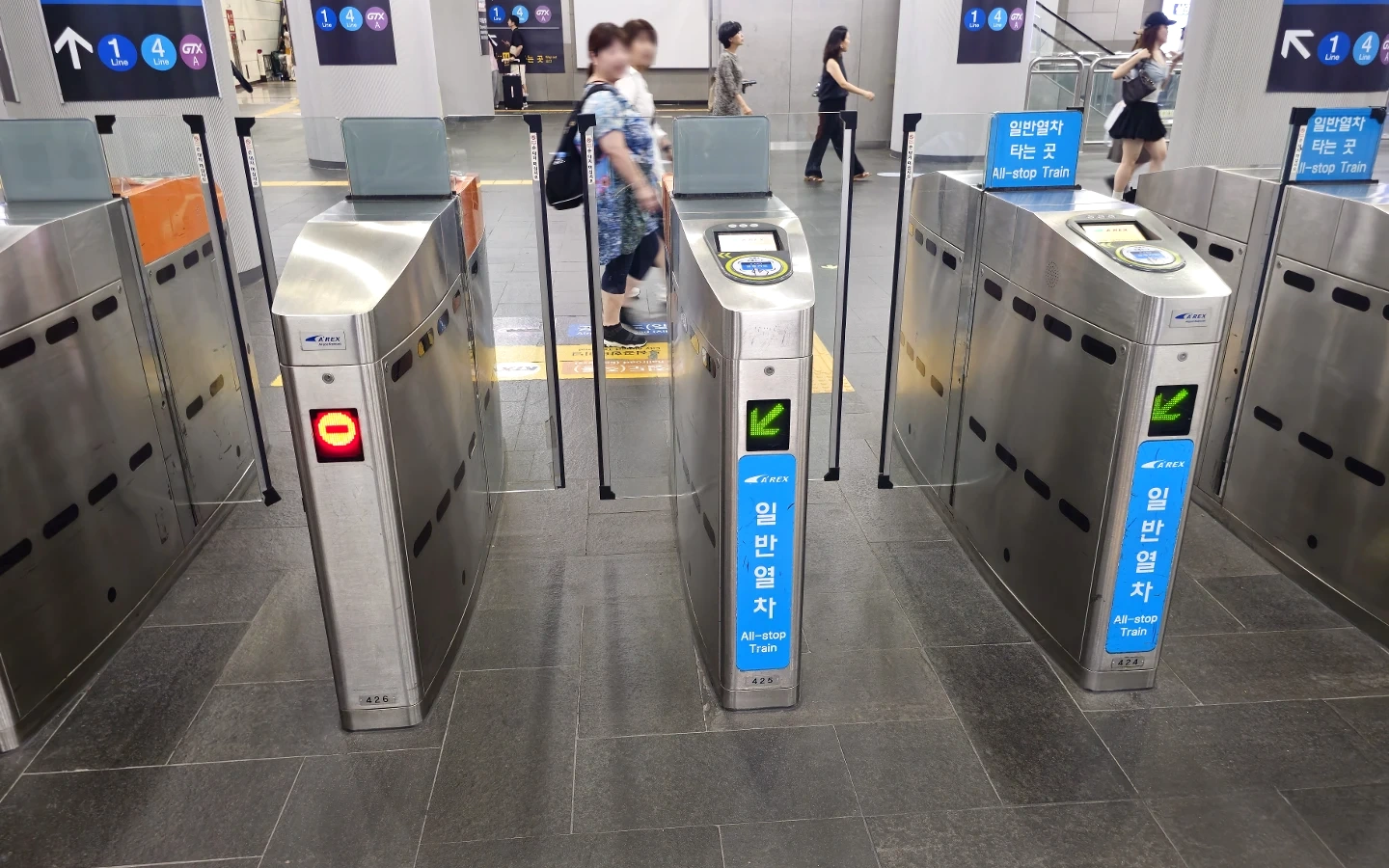
Two different trains, both branded AREX. That’s the whole reason people get caught out.
AREX All-Stop
Think of it as a normal subway line. Tap your T-money card and ride.
AREX Express
Different animal. You can’t tap T-money and board — it takes a separate reserved-seat ticket. I bought one at Terminal 1 and rode it to Seoul Station.
So before you head down, read the signage and work out which one you’re looking at. Same name, different way of getting on.
8. Into Seoul, Part Two: Airport Buses
“Does the airport bus take T-money” doesn’t have one answer. It depends on the operator, the terminal, the route, and which way you’re going.
Airport Limousine
Going from Incheon into Seoul, assume you’re buying a ticket first, either at a staffed counter or a ticket machine.
At Terminal 2, buying ahead has been mandatory for this company’s Seoul-bound buses since March 5, 2026.
At Terminal 1, routes 6001, 6002, and 6015 are the current exception. They run first-come, first-served and accept cash, a transit card, or a ticket.
Every other Terminal 1 route works the other way around: ticket holders board first, and buying a ticket is the default plan. There is one narrow opening — roughly a minute before departure, if seats are confirmed empty, the crew may allow boarding with a transit card. It’s not something to plan around.
K Airport Limousine
Boarding at Incheon requires a paper ticket bought in advance. Official guidance is that you cannot pay cash or tap a transit card onboard at the airport. A QR ticket may still need exchanging for a physical ticket at a staffed counter.
Going the other direction, Seoul to the airport, the rules can differ.
The reliable habit: operator, then direction, then terminal, then route.
9. The Seoul Subway
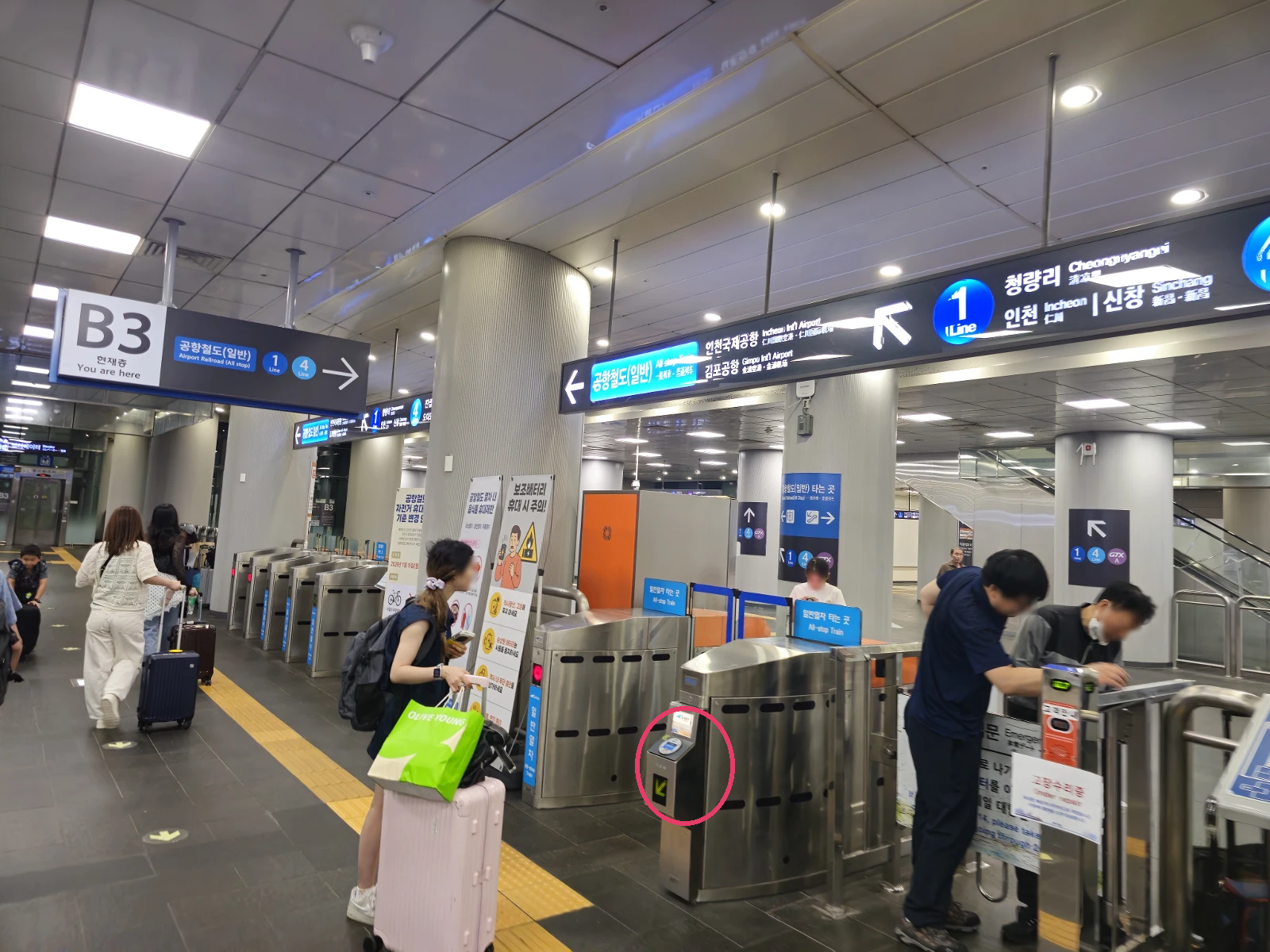
This part gets easy again. Tap on the way in, tap on the way out. That’s the whole system.
If a gate throws an error, don’t shove through it. When there’s no staff in sight, look for the call button or intercom by the wide gate or on either side of the turnstiles and ask for help.
The subway map looks like a lot on first viewing. As far as T-money goes it really isn’t — once in, once out. Seoul doesn’t make you work for this one.
10. On Seoul Buses, Tap Off Too
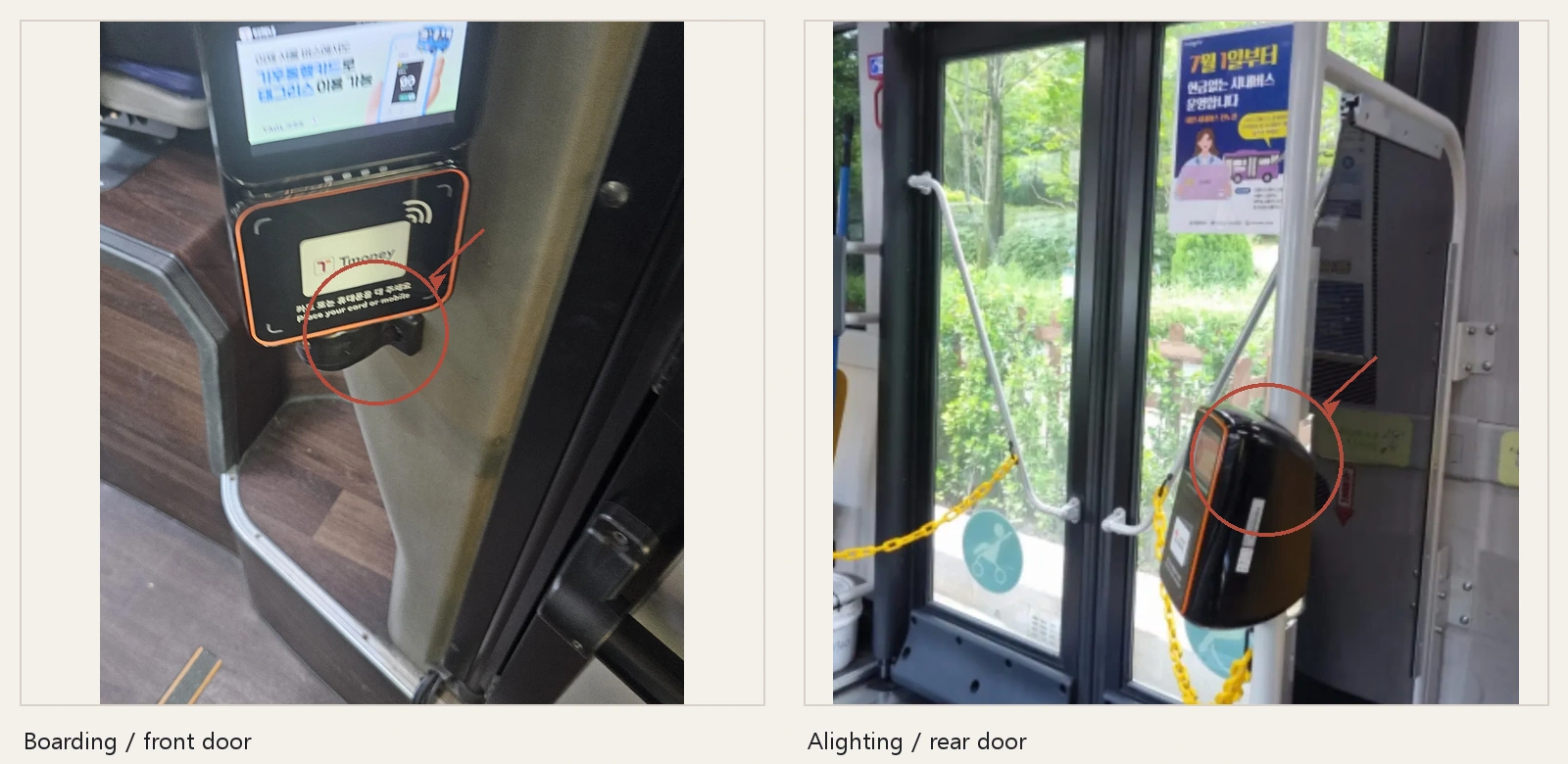
Two things. Tap on at the reader by the driver when you board. Tap off at the reader by the exit door when you get off.
That second tap feeds into transfer discounts and fare calculation, which is why it’s worth turning into a reflex.
And if you forget?
Nothing dramatic happens.
If you took one Seoul-licensed bus, no transfer, on the standard flat fare, missing the tap-off doesn’t raise the fare for that ride.
Transfers are where it counts. Tapping off is what carries your transfer discount to the next bus or subway leg. Skip it, and you’re likely paying the base fare again on the next ride.
That applies to Seoul-licensed flat-fare buses. Gyeonggi and Incheon distance-based buses, some metropolitan or express buses, and airport buses run on different rules, so don’t carry this over to them.
Now, the part that outranks all of the above. If you realize you missed the tap after you’re already off, and the doors have shut or the bus is pulling out — leave it. Don’t run after a moving bus. That isn’t a close call.
The actual stake is small. No transfer planned? Nothing changes. Transfer planned? You’ve lost one discount.
For one day, you’re allowed to be the kind of person who doesn’t sweat one missed transfer discount. Tap properly on the next one.
11. Transfers, Briefly
Seoul transfer window
You don’t need the full rulebook.
Tap off when you leave the bus, board your next ride within 30 minutes, and the transfer carries. Between 9 PM and 7 AM that window stretches to 60 minutes. Under current Seoul rules you get up to 4 transfers, 5 rides in total.
A transfer doesn’t automatically make the next ride free. Extra fare can apply depending on distance and which mode you switch to. And getting back on the same vehicle or the same route generally won’t count as a normal transfer.
What you actually have to do is much smaller than what the system is doing. Tap on. Tap off. Let it work out the fare.
12. Some Seoul Buses Don’t Take Cash
The natural fallback thought — if the card fails, I’ll just pay cash — doesn’t reliably work here. Some Seoul bus routes don’t take cash at all.
Which is the practical argument for carrying a T-money card or equivalent. You don’t need the rollout history or the fleet numbers by year. Just don’t head for a Seoul bus stop with cash as your only plan.
13. T-money Isn’t Only for Transit
Convenience stores and other merchants that support T-money will take it as payment. Plenty of taxis do too, though not every one — if T-money is your only means of paying, check before you get in.
This is also handy on your last day, when the leftover balance is an awkward number. You don’t have to make it come out even.
14. Mobile T-money on iPhone and Apple Watch
Mobile transit paths at a glance
T-money works on iPhone and Apple Watch. The catch is which payment card you can use, and that depends on the route you take.
Buying or topping up T-money directly in Apple Wallet requires a credit or debit card issued in South Korea, per Apple’s own guidance. For most visitors, that’s the wall.
The Mobile Tmoney app is the other route. Since March 18, 2026 it has supported top-ups from a set of foreign-issued cards:
- Mastercard
- American Express
- UnionPay
- JCB
Visa isn’t on the current list. If Visa is the only card you’re carrying, check again before you rely on this method.
Separate point, since it causes real confusion at the gates: a contactless foreign credit card is not a substitute for T-money. You can’t tap it at a Seoul subway turnstile and ride. Different system.
If this is reading as complicated, that’s a reasonable reaction. Landing and needing to move, a physical card is still the simplest thing you can do.
15. What About Android?
Android confused me too at first. The published guidance didn’t match across sources, and some pages still listed older OS requirements.
So I asked Tmoney’s customer center directly and got a written reply dated August 28, 2026.
On naming, to head off the obvious question: this is not the Mobile Tmoney app from the iPhone section above. It’s a separate Android service for foreign visitors called “KOREA TOUR CARD Tmoney.” And it’s not the physical KOREA TOUR CARD I mentioned as discontinued back in section 1 — different product, shared name.
From the reply, current conditions:
- Android 12 or higher
- A Korean SIM is not required
- Available on Google Play outside Korea and China
- Can be issued and topped up with a foreign-issued card
- No separate activation step once you arrive in Korea
Apps, OS requirements, store availability, and payment terms all move, so read that as a snapshot rather than a permanent spec.
More broadly, a mobile transit card has more that can go wrong than a physical one: handset, OS version, NFC, regional app availability, payment card. Which is why, for someone who has just landed and needs to be moving, I’d still point to the physical card as the default.
If you do want the mobile version, sort it out before you fly — confirm the app installs and the card issues on your actual phone.
16. Traveling With Kids or Teens
- 01
Check eligibility
Children and teenagers get a discounted fare once the card is registered for it.
The useful thing to know first: you don’t have to do it at the moment of purchase. You can register when you buy, or afterwards. Doing it at the counter is just simpler if the option’s there.
- 02
Register at purchase
According to the written reply I received from Tmoney’s customer center on August 28, 2026: when buying a physical T-money card at a convenience store, including the TMONEY TRAVEL CARD, giving staff the child’s or teen’s 8-digit date of birth (YYYYMMDD) lets them register the discount at the till.
The brackets:
- Children: ages 6 to 12
- Teens: ages 13 to 18
- 03
Register later
Missed it at purchase? You can register later through the children’s and teens’ discount registration menu in Tmoney Card&Pay, entering the card number and date of birth.
The reply I received didn’t state that a passport is required for this at a convenience store, so I’m not going to tell you that you need one. Having it accessible is still sensible in case someone asks you to confirm an age or a birth date.
Small practical note for families running several cards: write names or initials on them. Identical cards in one bag get mixed up faster than you’d think, and then nobody knows whose balance is whose.
17. T-money or the Climate Card?
If you’re planning heavy transit use inside Seoul, the Climate Card is worth putting side by side with T-money.
T-money is the simpler call if:
- It’s your first arrival in Korea
- You need to ride transit straight out of Incheon
- You’re heading outside Seoul at some point
- You’re not using transit heavily on a daily basis
- Your plans are still loose
The Climate Card is worth comparing if:
- Most of your trip stays inside Seoul
- You’re riding the subway and buses several times a day
- You want an unlimited short-term pass that matches your dates
As of September 2026, the tourist short-term passes:
- 1-day: ₩5,000
- 2-day: ₩8,000
- 3-day: ₩10,000
- 5-day: ₩15,000
- 7-day: ₩20,000
Note for anyone reading older articles: top-ups for the 30-day prepaid pass ended on August 31, 2026. The short-term passes above are still available.
One limitation matters specifically to arriving travelers. You cannot board AREX at Incheon Terminal 1 or Terminal 2 with a Climate Card and ride into the city. The reverse direction does work — you can board within the covered area and get off at either Incheon terminal. You just can’t tap in at the airport station. Airport buses aren’t covered either.
Which is why, for that first ride from the airport into Seoul, T-money is the cleaner starting point. Once you’re in the city and clearly riding a lot, that’s the moment to price out a Climate Card pass.
18. Leftover Balance at the End of Your Trip
Remaining balance can be refunded. What you don’t get back is the price of the card itself — refunds cover the loaded balance only, which isn’t the assumption most people start with.
Refunds can be handled at convenience stores and similar locations, and a small fee may apply.
If there’s a meaningful amount sitting on the card, look into the refund process. If it’s only a few thousand won, spending your last day chasing a small refund probably isn’t worth it.
Easier: spend it down. A banana milk or a snack at a convenience store on your way out clears a small balance nicely.
You don’t need to get the balance down to exactly ₩0 before your trip ends. That’s the whole argument for starting around ₩20,000 rather than loading a large amount up front: add more if you need it, and don’t overthink the leftovers.
19. You’ve Landed. Now What?
That was a lot of reading, so here’s the sequence.
- 01Buying a SIM or eSIM too? Check the telecom counter for a T-money promotion first.
- 02Promotions change — confirm that day’s terms rather than trusting an article.
- 03No free card included? Look at an airport CU or a staffed bus ticket counter.
- 04At airport CUs, you’re more likely to be offered the TMONEY TRAVEL CARD. The basic card may be harder to find on the spot.
- 05First CU out of stock? Try another.
- 06Struck out at the CUs? Try a staffed bus ticket counter or the T1 bookstore.
- 07Credit card is fine for buying the card. Bring Korean cash for loading the balance.
- 08Start around ₩20,000 and top up as needed.
- 09For AREX, check whether you want All-Stop or Express.
- 10For airport buses, check the operator and that route’s boarding rules.
- 11Subway: tap in, tap out.
- 12Bus: tap on, tap off.
- 13Missed a tap-off? Don’t chase the bus.
- 14At the end of the trip, refund the balance or spend it down at a convenience store.
If all of that made Korean transit sound like a lot of work, here’s the reframe: the fiddly part is those first few minutes at the airport, picking a card and putting money on it. After that, everyday subway and bus travel is mostly just tap on, tap off.
I went into this assuming it was one sentence long — buy a card at a convenience store, get on the train. What I actually found was availability that varied store to store, a TRAVEL CARD that was easier to get hold of than the basic card, telecom counters giving cards away with certain plans, and ticket counters selling cards already loaded with ₩20,000.
That’s why this guide doesn’t stop at where to buy one. The more useful information is what to do when that first stop doesn’t work out, and what happens when you get something slightly wrong along the way.